We build applied AIand the systems under it,then prove it holds.
A technology and strategy club at UC Berkeley. Engineers, researchers and operators out of MIT CSAIL, Amgen, Berkeley Lab and venture-backed AI startups. We scope one real problem — technical or commercial — build the working version or make the market call, and hand over the evidence that tells you whether it works.
- Founding leads
- 4
- Capability areas
- 6
- Disciplines per lead
- 2
- To Silicon Valley
- 1hr
Where our members have worked
- MIT CSAIL
- Amgen
- Blue Origin
- HP
- Berkeley Lab
- Innovative Genomics Institute
- Danaher
- NASA
- AECOM
Individual member affiliations — where our leads have researched, engineered, and shipped. Not client engagements, and not endorsements.
Seven lines of work. The same four leads behind each one.
Every engagement starts as one of these. The list is short on purpose — we take work we can staff with people who have already shipped something like it.
Twelve weeks, four checkpoints
None of this is unusual. The difference is that we hold to the dates, and that you see the work every week instead of at the end.
- 01
Scope
Weeks 1–2
One problem, not five. We write down the success metric, you agree to it in writing, and only then does anyone open an editor.
- 02
Discovery
Weeks 3–4
We go to where the work happens — the bench, the queue, the spreadsheet one person maintains by hand. If the premise is wrong, you hear it in week four.
- 03
Build
Weeks 5–10
Working software, demoed every week — whether or not the week went well. The last two weeks measure it against the baseline from week two, including when the number falls short.
- 04
Handover
Weeks 11–12
Code, documentation, and a decision memo: ship, iterate, or stop. The reasoning comes with it, so the call outlasts us.
We would rather kill a bad idea in week four than deliver it in week twelve.
That is the only reason the checkpoints exist. Killing a project early costs you four weeks; discovering it at handover costs you a quarter.
The four people who do the work
No bench, no handoff. Whoever scopes your engagement is also the person writing the code, and each of them brought three things they are genuinely good at.
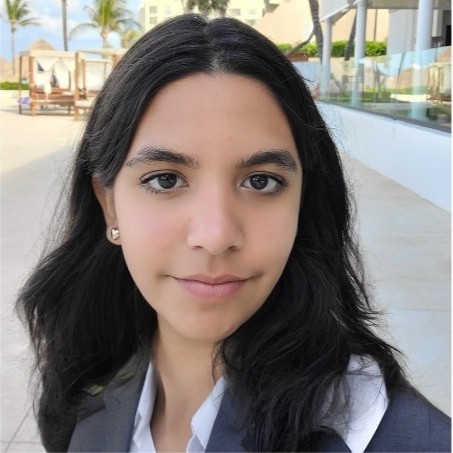
Ishita Samadhiya
Leads engineering. Splits time between AI research at MIT CSAIL and shipping production systems, which is why our prototypes arrive with evals attached rather than vibes.
- 01
Applied AI & LLM Systems
- 02
AI Research
- 03
Full-Stack & Cloud Infrastructure
- MIT CSAIL
- Blue Origin
- HP
- Venture-Backed AI Startups
- Founder, 1 Exit

Aniruddh Mohan
Leads client strategy. Bioengineering training plus a business core, so scoping conversations start from the science rather than from the software.
- 01
Life Sciences & Diagnostics
- 02
Product Strategy
- 03
Commercial Analysis
- Danaher
- NASA
- UC Berkeley M.E.T.
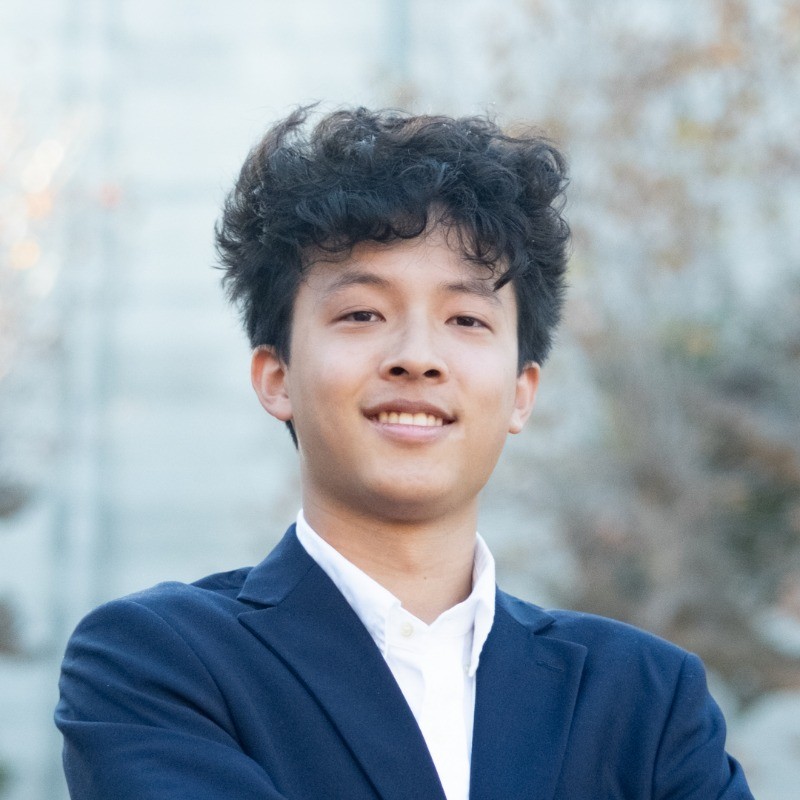
Harrison Tang
Leads lab-facing work. Actually runs experiments on lab instruments most weeks, which shortens the distance between a proposed feature and whether a scientist would use it.
- 01
Biomanufacturing & Lab Operations
- 02
Instrumentation & Research
- 03
Product Management
- Amgen
- Berkeley Lab (JBEI)
- Innovative Genomics Institute
- Masason Fellow

Sritej Bommaraju
Leads deployment. Built a document-extraction engine now piloting inside a Fortune 250, and brings a bias toward deterministic systems where auditability matters.
- 01
Forward-Deployed Engineering
- 02
Document AI & Extraction
- 03
Applied Math & Systems
- Founder, stet
- Sr. FDE, AECOM
Tell us what you’re trying to build.
One page is enough: the problem, the constraint, and who it affects. You get back a scope, a timeline, and an honest read on whether we are the right team for it.